Boy Holding Pichkari Redwork: A Designer's Review
As an embroidery designer who spends countless hours digitizing and testing files for commercial use, I approach every new machine embroidery design with a critical eye. It is not enough for a file to look pretty on a screen; it must perform flawlessly on fabric, withstand washing, and elevate a brand's identity. Today, I am reviewing the Boy Holding Pichkari Redwork specifically through the lens of small business owners, boutique creators, and apparel decorators looking to add cultural flair to their merchandise.
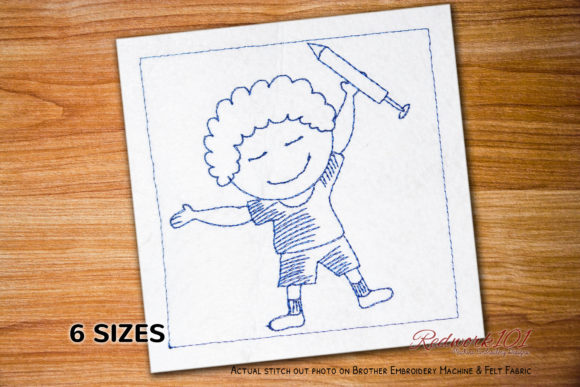
This design falls under the Asia product category and represents a specific type of Embroidery known as Redwork. Historically, Redwork utilizes a single color of thread, usually red, to create outline-based designs. This technique is beloved for its rustic charm and simplicity. However, when we translate this aesthetic into modern small business merch, we need to evaluate its versatility beyond tradition. The description notes that "The Box Stitch shown in picture is optional," which immediately signals flexibility—a crucial trait for custom applications where hoop space or fabric texture might be limiting factors.
Visual Personality and First Impressions
The first impression of the Boy Holding Pichkari Redwork is one of playful nostalgia. The imagery of a boy holding a Pichkari (a traditional water gun used during festivals like Holi) evokes feelings of joy, celebration, and community. For a brand, this translates to a friendly and approachable visual personality. Unlike complex, high-density logos that can feel corporate or stiff, this redwork style feels handmade and authentic.
For handmade brands and Etsy sellers, this "hand-drawn" aesthetic is gold. It suggests that the finished product was crafted with care rather than mass-produced in a factory. The single-color nature of true redwork allows it to blend seamlessly into various brand palettes. Whether your brand colors are vibrant and bold or muted and earthy, this design can be adapted by simply changing the thread colors in your embroidery software. It feels both classic and modern, making it suitable for a wide range of industries from creative studios to local bakeries wanting to celebrate cultural heritage.
Real-World Business Applications
When considering where to deploy the Boy Holding Pichkari Redwork, the possibilities for commercial embroidery projects are extensive. Because the design relies on outlines rather than heavy fill stitches, it performs exceptionally well on items where bulk is undesirable.
- Embroidered Patches: This is perhaps the strongest use case. The optional box stitch mentioned in the product description makes this ideal for creating custom patches. You can omit the box to let the design float on a shaped patch or include it for a structured, badge-like look. These patches can be sewn onto denim jackets, tote bags, or sold as standalone accessories.
- Staff Uniforms and Aprons: For cafés, florists, or boutiques, apron embroidery needs to be durable yet unobtrusive. The redwork style adds a touch of personality to a plain uniform without overwhelming the garment. It serves as a subtle chest logo accent that builds team identity.
- Cap Embroidery: Caps are tricky due to their curved surface. The linear nature of redwork often handles curves better than large filled areas, provided the design is scaled correctly. This could work beautifully on the side panel of a baseball cap or the front of a bucket hat.
- Tote Bag Design: Canvas totes are a staple for retail shops. The Boy Holding Pichkari Redwork offers a striking graphic element that stands out against natural cotton or canvas textures, enhancing the perceived value of the bag as a promotional item or customer gift.
Technical Considerations for Production
While the aesthetic appeal is high, a professional designer must address the technical realities of production. The product description states, "The color of outer Box is different color in most of the designs unless it is part of the design itself, you can skip the color direct." This implies that the digitizer has separated elements, giving you control. However, before running a production batch, there are several steps you must take.
First, test it in black and white first. Even though it is a redwork design, viewing the stitch-out in monochrome helps you assess the contrast and line weight without the distraction of color. Next, check if it works at your intended small patch size. Redwork relies on clear lines; if you scale it down too much for a tiny label, the threads may merge, losing the definition of the boy and the Pichkari.
You must also review thread color contrast against your chosen fabric. On dark uniforms, a standard red thread might get lost unless you use a brighter shade or a underlay stitch that pops. Inspect the spacing between lines to ensure no fabric shows through awkwardly, which can happen with textured materials. Confirm your hoop size capabilities; while redwork is generally compact, ensure your machine can handle the dimensions if you choose to include the optional box border.
Crucially, always test on real fabric with the proper stabilizer. A design that looks perfect on polyester might pucker on a linen apron or a knit t-shirt. Create a printable mockup for client approval before stitching the final run. Compare this design beside your other design assets to ensure visual consistency across your brand collateral. Finally, confirm commercial licensing terms before business use, as rights vary by seller.
Navigating Challenges and Brand Impact
There are scenarios where the Boy Holding Pichkari Redwork requires careful handling. If you are applying this to highly textured fabrics like thick wool or Terry cloth, the fine outlines of the redwork might get swallowed by the pile. In these cases, a heavier underlay or a slight increase in stitch width may be necessary, though this alters the delicate redwork look. Similarly, avoid using this design on items that require industrial-grade frequent washing unless you have reinforced the stitching, as outline stitches can be more prone to snagging than satin fills.
Despite these cautions, the impact on brand identity can be profound. Using culturally significant imagery like the Pichkari demonstrates inclusivity and awareness, fostering deeper customer trust and recognition. It elevates the perception of professionalism by showing attention to detail in your custom apparel and product offerings. For buyers, seeing such a specific, well-executed design on a product label or patch increases engagement and the perceived value of the handmade item.
In conclusion, the Boy Holding Pichkari Redwork is a versatile asset for the modern embroidery entrepreneur. It bridges the gap between traditional artistry and contemporary branding. By respecting the technical limitations of redwork and leveraging its stylistic strengths, small business owners can create memorable, high-quality merchandise that resonates with their audience. Just remember to verify the specific file details, such as exact stitch count and format, directly with the provider since they were not explicitly listed in the base description, ensuring your production runs smoothly.