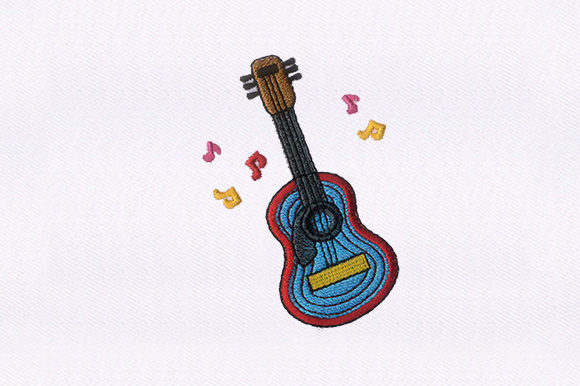
Guitar Embroidery Design Review for Small Business Merch
As an embroidery designer who has spent years digitizing and reviewing files for commercial use, I approach every new machine embroidery design with a critical eye. It is not just about whether the art looks good on a screen; it is about how it performs under the needle, how it wears after fifty washes, and how it elevates a brand's identity. Today, I am reviewing the Guitar design, a file intended for the Music category but versatile enough for a wide range of small business applications. For boutique owners, café managers, and Etsy sellers looking to expand their small business merch, this review breaks down the viability of this asset for real-world production.
First Impressions and Visual Personality
Upon loading the digital embroidery file into my editing software, the first thing that strikes me about the Guitar design is its balance between classic instrumentation and modern stylization. While the product description lists a massive array of formats—including DST, PES, EXP, and JEF—the visual impact is what matters most for branding. The design feels professional yet approachable, carrying a rustic and handmade quality that resonates well with creative studios and local businesses. It does not scream "corporate"; instead, it whispers "artisan," making it an excellent candidate for brands that want to project authenticity.
The line work appears clean, suggesting a thoughtful approach to stitch density. In my experience, designs in the Music category often suffer from over-complication, trying to capture too many strings or fret details that turn into thread blobs when stitched small. This design seems to avoid that trap, offering a bold silhouette that remains recognizable even at reduced sizes. For a brand identity focused on creativity, rhythm, or simply a love for the craft, this visual personality is a strong starting point.
Real-World Applications for Commercial Embroidery
The true test of any embroidery file is its versatility across different substrates. Here is how I see the Guitar design performing in various commercial scenarios:
- Embroidered Patches: This is perhaps the strongest use case. The bold outlines of the guitar shape translate beautifully into a merrow-edge or laser-cut patch. Small coffee shops or music venues could use these as loyalty rewards or retail items.
- Staff Uniforms and Aprons: For a bakery or florist with a musical twist, placing this design on the chest of an apron embroidery project adds a unique touch. It breaks the monotony of standard logos and sparks conversation with customers.
- Cap Embroidery: The curvature of a baseball cap requires a design with stable columns. Assuming the digitizing accounts for pull compensation, the Guitar motif works well on the front panel or as a side accent on dad hats, appealing to a younger demographic.
- Tote Bag Design: Canvas bags are a staple for market vendors. A medium-sized placement of this design on a tote creates an instant handmade product feel, increasing the perceived value of the bag significantly compared to a plain screen print.
- Event Merch and Customer Gifts: For local festivals or studio open houses, this design serves as an excellent commemorative mark on work shirts or limited-edition gear.
Technical Considerations and Production Challenges
While the aesthetic appeal is high, a professional reviewer must address the technical hurdles. Before running a full production batch of custom apparel or patches, there are specific areas where the Guitar design requires careful attention.
First, consider the fabric texture. If you are stitching this onto thick terrycloth towels or highly textured fleece, the finer details of the guitar body might get lost. I recommend testing the design on a smooth twill or cotton poplin first to ensure clarity. Second, be wary of thread colors. If your brand palette relies on dark uniforms, ensure you have high-contrast thread options ready. A black guitar on a navy shirt will vanish; you may need to adjust the color sequence in your embroidery software to create a border or highlight that ensures visibility.
Another critical factor is size. If you intend to use this as a tiny label on the hem of a garment, verify that the internal details do not collapse. High stitch density in small areas can lead to bird-nesting or fabric puckering. Always check the hoop size compatibility listed in the file specifications. Since the product data lists formats like VIP, VP3, and XXX, ensure your machine reads the specific version you download to avoid resizing errors that distort the aspect ratio of the instrument.
Essential Designer Notes for Business Owners
To ensure the finished product meets professional standards, follow these practical steps before selling items featuring this design:
- Test in Black and White: Stitch a sample using only one or two contrasting colors. This reveals the structural integrity of the design without the distraction of color blending.
- Verify Stabilizer Requirements: Depending on the stretch of your fabric, you may need a cut-away stabilizer rather than tear-away to prevent distortion over time, especially for items like tote bags that carry weight.
- Create a Printable Mockup: Before committing to thread, place the design digitally on a photo of your actual product. This helps clients visualize the brand identity and approve the placement.
- Check Commercial Licensing: The file formats provided (including ART, CND, DSB) suggest broad compatibility, but always confirm the license terms. Ensure you have the right to use the Guitar design for commercial goods and not just personal crafting.
- Compare Design Assets: View this design alongside your existing logo elements. Does it complement your current visual consistency, or does it clash? Consistency builds customer trust.
Impact on Brand Identity and Customer Trust
In the crowded marketplace of handmade goods and local services, professionalism is key. Using a high-quality machine embroidery design like Guitar signals to customers that you care about the details. Unlike a cheap vinyl transfer that peels after a few washes, embroidery conveys permanence and quality. When a customer sees a neatly stitched guitar patch on a bag or a crisp logo on an apron, their perception of your brand's value increases.
This design supports buyer engagement by adding a layer of personality to your products. It transforms a generic item into a story-driven piece. For music teachers, instrument repair shops, or even cafes that host live acoustic sets, this design acts as a visual shorthand for your niche. It reinforces recognition and helps your merchandise stand out on social media feeds where visual appeal drives clicks and sales.
In conclusion, the Guitar embroidery design offers a robust solution for small businesses looking to diversify their product lines. With its extensive format support ranging from PEC to HUS, it fits into almost any digital workflow. However, success lies in the execution. By respecting the limitations of fabric and thread, and by rigorously testing the design before full-scale production, you can leverage this asset to create premium, durable, and visually striking merchandise that truly represents your brand.